Composite profile
Overall score
76/100
Use the Uppsala profile to compare cost framing, transport access, and country-level context alongside Stockholm and other Nordic peers.
Overall76/100
Affordability65/100
Air quality80/100
Energy80/100
Sweden / Northern Europe
Uppsala is a Swedish university metro north of Stockholm, with research, life-sciences, and healthcare activity shaping a stable urban profile. Uppsala is a northern europe city of about ~0.23M metro in Sweden. On the composite city-intelligence score, Uppsala sits around the indexed median (76/100).
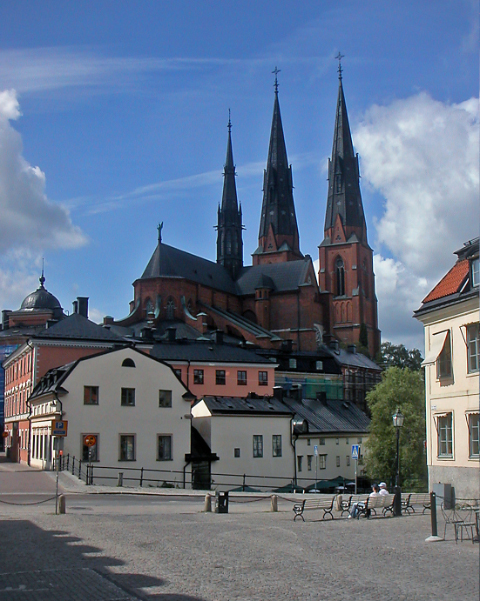
Image credit: Image: This image was produced by me, David Castor (user:dcastor). The pictures I submit to the Wikipedia Project are released to the public domain. This gives you the right to use them in any way you like, without any kind of notification. This said, I would still appreciate to be mentioned as the originator whenever you think it complies well with your use of the picture. A message to me about how it has been used would also be welcome. You are obviously not required to respond to these wishes of mine, just in a friendly manner encouraged to. (All my photos are placed in Category:Images by David Castor or a subcategory thereof.) / Wikimedia Commons, Public domain
Composite profile
76/100
Use the Uppsala profile to compare cost framing, transport access, and country-level context alongside Stockholm and other Nordic peers.
76/100
Composite directional score across affordability, air quality, clean energy, and resilience.
Directional
Directional indicators pending integration of verified city-level data.
See country hub
Emergency, healthcare, and transport verification status appears on the country hub.
The table is part of the initial server-rendered HTML and mirrors the key city score cards.
| Metric | Value | Context |
|---|---|---|
| Overall score | 76/100 | Composite score across major city intelligence modules. |
| Cost of Living | 65/100 | Uppsala's cost-of-living profile is a directional indicator pending integration of verified city-level data; structured benchmark context applies. |
| Air Quality | 80/100 | Uppsala's air-quality profile is a directional indicator framed against WHO and regional benchmarks; verified city-level measurements appear in the dedicated air-quality dataset section once integrated. |
| Energy | 80/100 | Uppsala's energy-readiness profile is a directional indicator that combines national policy framing with city-level adaptation context. |
| Safety | 76/100 | Uppsala's safety profile is a directional indicator; verified country-level emergency profiles attach via the country hub where available. |
| Internet Speed | 78/100 | Uppsala's connectivity profile is a directional indicator combining national digital-readiness context with widely cited speed-test references. |
| Climate Risk | 76/100 | Uppsala's climate-risk profile is a directional indicator combining regional hazard categories with national adaptation capacity. |
| Resilience | 76/100 | Climate adaptation and infrastructure continuity context. |
Deterministic safety estimates from our index — planning signals derived from country priors and city data, not official crime statistics.
Uppsala ranks in the upper tier of our safety index (90/100), with strong personal-safety and low night-time indicators.
A composite quality-of-life estimate and its component indicators.
Uppsala has a very high quality-of-life estimate (83/100), with notable strengths in healthcare, public transport, cleanliness and infrastructure.
How the city scores for raising a family, with the indicators that drive it.
Uppsala scores very high for family living (84/100), helped by education access, safety and healthcare.
Suitability for remote workers, based on connectivity, mobility, and livability.
Uppsala is very high for remote workers (82/100), based on connectivity, affordability, walkability, safety and overall livability and day-to-day amenities.
Suitability for retirement, weighing healthcare, affordability, climate, and environment.
Uppsala is very high for retirement (80/100), appealing for healthcare access, affordability and a clean environment.
Local public safety guidance for Uppsala, with the country-level emergency contacts that apply when calling for police, fire, or ambulance.
For the universal emergency contacts that apply in Uppsala, including police, fire, and ambulance, see the Sweden emergency profile, which currently lists no verified national contacts.
Methodology and the wider source registry are documented on the scoring methodology and data sources pages.
Healthcare context for Uppsala, with national-level information from Sweden where city-specific data is not yet verified. This is informational only and does not provide medical advice.
For the national healthcare and public-health context that applies in Uppsala, see the Sweden healthcare profile, which currently lists no verified national healthcare information.
Related sections: emergency and public safety, scoring methodology, and data sources.
Local mobility context for Uppsala, with national-level context from Sweden where city-specific data is not yet verified. This is informational only.
For national transport authorities and operators that apply in Uppsala, see the Sweden transport profile, which currently lists no verified national transport information.
Related sections: emergency and public safety, healthcare and hospitals, cities directory, countries directory, scoring methodology, data sources.
Source-attributed air-quality dataset for Uppsala. Verified measurements are surfaced when published from accepted official datasets; transparent fallback is shown otherwise.
Source-attributed values for Uppsala will appear here after the platform integrates verified measurements from accepted official publishers. Until then, structured air-quality module context remains available on the dedicated module page.
| Metric | Value | Data year | Status |
|---|---|---|---|
| Air quality | Verified air-quality measurements are not yet published for this location. | ||
Global City Intelligence — air-quality dataset
Verified data unavailableThe air-quality dataset begins empty by design. Verified city-level measurements appear here only after they are sourced from accepted publishers (WHO, EEA, US EPA, OpenAQ, OECD, or official national/city environmental agencies).
Numeric measurements appear in this section only after they are sourced from accepted official publishers. The dataset is independently validated at build time; malformed records cannot ship to production.
Quick, evidence-based answers about Uppsala drawn from this profile's indexed cost, climate, safety, economy, education, healthcare and nearby-nature data. Figures are deterministic estimates for orientation — verify specifics with official sources.
Yes — excellent quality of life (83/100), with nearby nature such as Farnebofjarden National Park.
Excellent (84/100) on safety, schools and green space.
More affordable than average; about SEK 18,100/month for one person (estimate).
Late spring to early autumn; warmest in Jul, coldest in Jan.
Mainly technology, manufacturing, research.
A subarctic climate, averaging about 1.0°C.
Higher education is strong (73/100).
Healthcare access is strong (75/100).
Retirement suitability is strong (70/100).
Within ~170 km: Farnebofjarden National Park.
City pages link to module and ranking pages so crawlers can move through the topic cluster naturally.
Uppsala's cost-of-living profile is a directional indicator pending integration of verified city-level data; structured benchmark context applies.
Uppsala's air-quality profile is a directional indicator framed against WHO and regional benchmarks; verified city-level measurements appear in the dedicated air-quality dataset section once integrated.
Uppsala's energy-readiness profile is a directional indicator that combines national policy framing with city-level adaptation context.
Uppsala's safety profile is a directional indicator; verified country-level emergency profiles attach via the country hub where available.
Uppsala's connectivity profile is a directional indicator combining national digital-readiness context with widely cited speed-test references.
Uppsala's climate-risk profile is a directional indicator combining regional hazard categories with national adaptation capacity.
Compare this city against other indexed cities in crawlable ranking tables.
Cost of living estimates for Uppsala — monthly budgets, rent, food, and transport in the local currency, plus an affordability score for comparison. Planning estimates derived from country baselines, not live prices.
Climate profile for Uppsala — Subarctic climate, annual average 1°C, comfort score 56/100. Month-by-month temperatures, rainfall, sunshine, and the best months to visit. Deterministic planning estimates, not a forecast.
Economy and jobs profile for Uppsala — regional center, economy score 84/100, key industries including technology, manufacturing, research. Employment, salary, startup, remote-work, and career indicators. Deterministic planning estimates.
Education profile for Uppsala — regional education center, education score 69/100, 4 representative universities, plus research, student life, and international-student indicators. Deterministic dataset, not institutional rankings.
Healthcare and retirement profile for Uppsala — regional healthcare center, healthcare score 75/100, retirement score 70/100. Medical access, specialist and emergency care, affordability, and retirement suitability. Deterministic planning estimates.
Practical arrival planning context for Uppsala — links into transport, public-safety, healthcare, budgeting tools, and methodology. Not an official airport or travel instruction service.
Source-attributed visual context for Uppsala using verified Wikimedia imagery from the existing media catalog, alongside structured city intelligence and planning links. Not a tourism guide or attractions ranking.
Weekend trip planning checklist for Uppsala — links into arrival planning, Summer 2026 travel context, visual orientation, budget tools, transport, public safety, and healthcare context. Not an itinerary, events calendar, hotel-price guide, restaurant guide, or tourism ranking.
Source-backed nearby place records for local-first weekend planning, with verification status, official source links, Wikidata identity, and visual context.
Estimate a monthly budget for Uppsala using your own housing, food, transport, healthcare, and lifestyle inputs. Planning estimator only — not an official cost-of-living measurement.
Plan a trip budget for Uppsala using your own accommodation, food, local transport, activities, travel, healthcare buffer, and emergency buffer inputs. Planning estimator only — not an official travel cost estimate.
Where else nearby you could spend a day or a weekend from Uppsala. Links are derived from geographic proximity, shared region, shared natural-recreation areas, transport corridors, and country borders — not popularity or tourism rankings.
Same region · about 63 km from Uppsala. Explore Stockholm's city intelligence profile.
Same region · about 67 km from Uppsala. Explore Västerås's city intelligence profile.
Same region · about 73 km from Uppsala. Explore Södertälje's city intelligence profile.
Same region · about 82 km from Uppsala. Explore Eskilstuna's city intelligence profile.
Same region · about 96 km from Uppsala. Explore Gävle's city intelligence profile.
Same region · about 152 km from Uppsala. Explore Örebro's city intelligence profile.
Same region · about 165 km from Uppsala. Explore Norrköping's city intelligence profile.
Same corridor · about 197 km from Uppsala. Explore Linköping's city intelligence profile.
Same corridor · about 238 km from Uppsala. Explore Karlstad's city intelligence profile.
Same corridor · about 250 km from Uppsala. Explore Visby's city intelligence profile.
Regional discovery collections that include Uppsala — named natural regions grouping nearby nature, parks, lakes, coasts, and mountains for local-first day and weekend planning.
National parks · 19 places across 28 cities.
Weekend escapes · 30 places across 25 cities.
Theme-first discovery collections that include Uppsala — grouped by outdoor interest (mountains, lakes, coasts, forests, national parks) rather than geography.
Weekend Nature Retreats · 50 places across 80 cities.
Common questions about living in, visiting, working in, studying in and retiring to Uppsala, answered from the indexed cost-of-living, climate, safety, economy, education, healthcare and nearby-nature data on this profile.
Uppsala has a very high quality-of-life estimate (83/100), with notable strengths in healthcare, public transport, cleanliness and infrastructure. Visitors can also reach nature such as Farnebofjarden National Park within weekend range.
Uppsala has a very high quality-of-life estimate (83/100), with notable strengths in healthcare, public transport, cleanliness and infrastructure. It indexes 83/100 for overall quality of life.
A single resident of Uppsala spends roughly SEK 18,100 per month, with a one-bedroom rent near SEK 9,630. Overall the city is more affordable than average for Sweden. These are modelled estimates, not live quotes — verify locally.
Plan for below-average living costs and check current rents before relocating. Uppsala is very high for remote workers (82/100), based on connectivity, affordability, walkability, safety and overall livability and day-to-day amenities.
Uppsala's labour market is very strong, with opportunities concentrated in technology, manufacturing and healthcare. Uppsala has a regional economy with strengths in technology, manufacturing and research.
Uppsala offers strong infrastructure and amenities for remote professionals, with a remote-work score of 89/100.
Uppsala is a regional education center with a mix of universities and research activity in our dataset, spanning fields such as Social Sciences, Mathematics and Medicine.
Uppsala offers a strong student environment, supported by walkable neighborhoods, relatively affordable living and strong quality of life.
Uppsala has a regional healthcare center, supported by hospitals, specialist services, and public-health infrastructure, with a healthcare score of 75/100. Residents have very strong access to healthcare across primary, specialist, and emergency care.
Uppsala offers a combination of healthcare access, safety, and amenities that may appeal to retirees, with a retirement score of 70/100. Residents benefit from walkable streets and broad urban amenities and day-to-day services.
Uppsala has a subarctic climate, averaging about 1.0°C annually with roughly 600 mm of rain. The hottest month is Jul and the coldest Jan. The driest is typically Jan.
Uppsala ranks in the upper tier of our safety index (90/100), with strong personal-safety and low night-time indicators.
Uppsala indexes a walkability score of 84 and a cycling score of 79 out of 100. Check the local operator for live transit routes and fares.
Nature destinations within about 170 km of Uppsala include Farnebofjarden National Park. Each is linked with its official source on the profile.
Uppsala scores very high for family living (84/100), helped by education access, safety and healthcare.
Uppsala rates 26/100 for outdoor lifestyle and 54/100 for green space. Nearby nature such as Farnebofjarden National Park supports day hikes, water activities and weekend trips.
Use the Uppsala profile to compare cost framing, transport access, and country-level context alongside Stockholm and other Nordic peers. Its standout dimensions are air quality (80/100) and energy (80/100). The area most worth watching is cost of living (65/100), where the model registers practical gaps. Data year 2025; last updated 2026-05-16. Drawn from 4 institutional references.
Country context is available on the Sweden country page. Related rankings include Overall Intelligence, Quality of Life, Remote Work. See where Uppsala appears in global rankings or read the scoring methodology.
Structured indicators on this page are directional and intended for orientation. Verified datasets are being integrated; official sources should be used for critical decisions.
4 institutional references inform this view, listed below with reliability notes. Structured indicators on this page are directional and intended for orientation; verified datasets are being integrated and official sources should be used for critical decisions.
Used as a policy and methodology reference for urban exposure and resilience signals.
Used where European city comparisons need monitored air-quality context.
Used as an energy-resource and weather-normalization reference.
Used to explain urban climate vulnerability and adaptation scoring logic.